
Worth Keeping
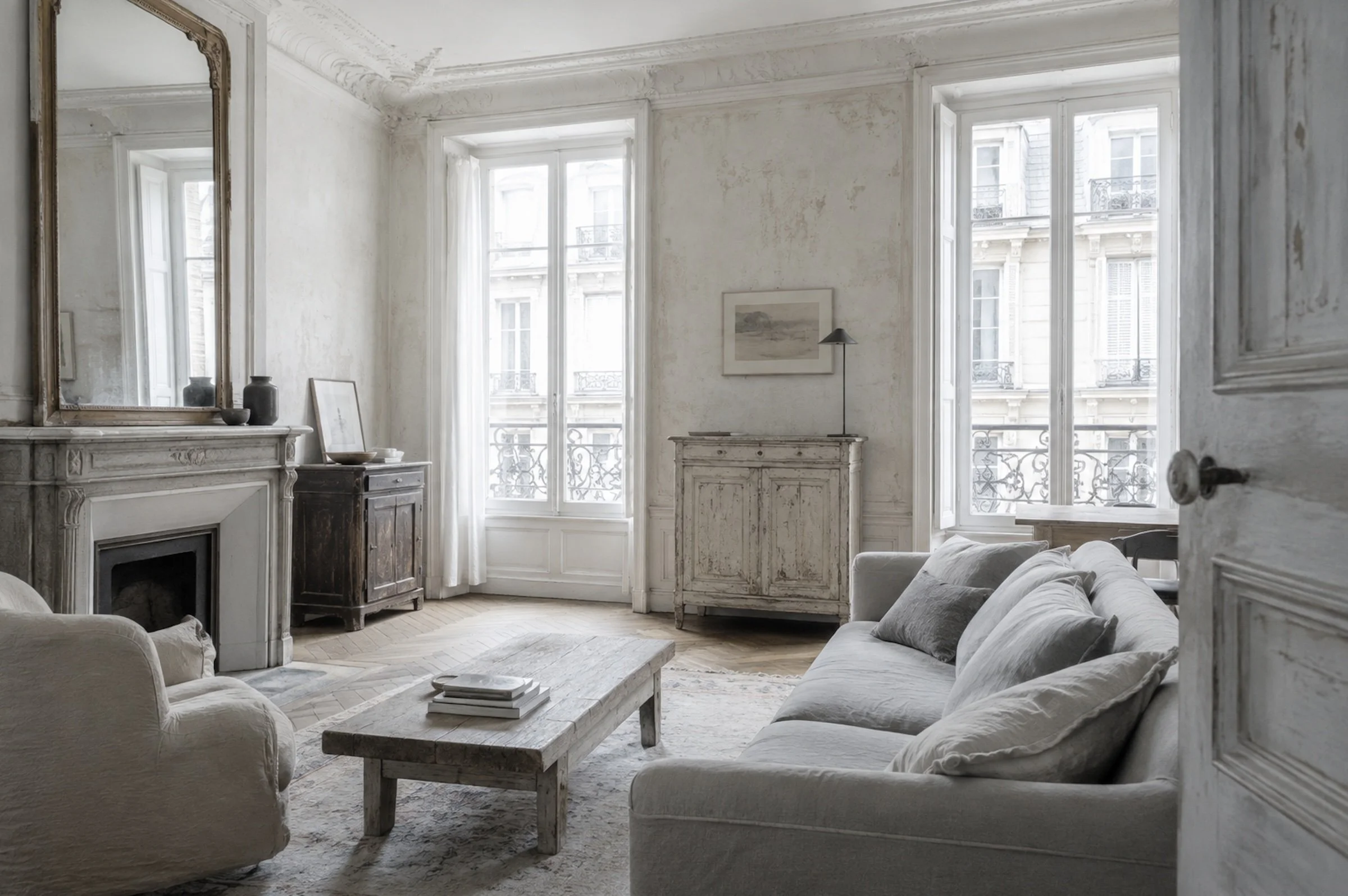
I was out to dinner with a friend last night and she asked a question I woke up thinking about. What happened to beauty in the world? You never see beauty anymore. And our capacity for appreciating that beauty is what makes us human.
She said it offhand, the way people say true things, and it landed because I have been circling the same question since a trip to Paris.
It is not that Paris is beautiful. Plenty of places are beautiful. It is that so little of it has been thrown away. You walk through doors hung before anyone in my family was born, on hinges someone has been oiling for two hundred years. The zinc counter is worn into a dip where forty thousand elbows have gone. Nothing there is new and almost nothing is ruined, because somebody in every generation decided the thing was worth keeping and knew how to keep it. A city like that is not an aesthetic. It is an accumulation of decisions to repair.
Then you fly home, and the contrast is not subtle. Here, most of what surrounds us was made by no one. Not literally, but you cannot find the person in it. The sweater pills after three washes because it was knit thin on purpose. The dresser is particleboard with a photograph of oak printed on top. The failure is not a defect. It is a schedule, designed by a company that needs you back in ninety days. A thing breaks, you feel nothing, and you order the replacement before you have finished throwing the first one away. Nobody grieves an object that was never anyone's work.
For most of human history, art was not something you went to see. It was something you ate off of. The spoon had a shape somebody chose. The door had a handle a smith made with his hands, and you touched it four times a day for forty years, and the brass wore down where your palm went. The chair was joined rather than assembled. The blanket was woven by a woman whose grandmother taught her the pattern, and you could tell whose it was. Beauty was distributed through ordinary life at close range. It was in the objects you used without ceremony, made by people who lived nearby and whose names you knew.
We took all of that and moved it into museums, where it sits behind glass and gets called craft, and then we filled our houses with things that no one made. The art did not disappear. We removed it from the places where it used to live, and then we wondered why the rooms feel like nothing.
And the makers went with it. Skill is not stored anywhere. It lives in hands, and it dies in one generation of nobody paying for it. When you buy the good coat, you are not buying a coat. You are keeping alive a person who knows how to cut a shoulder, and the possibility that she will teach somebody else.
So buy the good coat. But buying well is the easy half. The harder half is what you do when it breaks, because it will. Take the shoes to be resoled. Have the coat relined, the hem let down, the knife reground, while there is still someone within driving distance who can do it. Someone will tell you it would be cheaper to replace it. That person is not wrong about the money and is wrong about everything else. Repair is the only relationship with an object that deepens over time. Everything else is transaction.
I keep coming back to a single fact, which is that nothing cheap has ever developed a patina. Good things get better. Linen loses its stiffness and becomes the best thing you own. Leather takes the shape of what you carry. Wood grays and holds the weather in it, which is why a hundred year old pier is worth looking at and a new one is not. These materials are keeping a record of your life and giving it back to you as surface. Cheap things begin at their best moment, the one in the photograph, and every day after is a subtraction.
Buy less. Buy things made by a person who is still alive. When they break, take them to somebody who can fix them. Keep them long enough that they look like yours, and then long enough that they can look like somebody else's. A city is only the sum of people who decided a thing was worth keeping. So is a house. So is a life.